MOQ: 10,000 PCS per SKU | Tiered Pricing from 20,000 PCS | In Stock & Flexible Wholesale

Quick Answer
You can launch a private label toothpaste brand by defining a clear niche and brand feel, picking a matching formula, designing compliant tube and carton packaging that stands out, partnering with an experienced manufacturer, and moving through sampling, testing, and production.
Most first runs cost $3,000–$50,000 with MOQs of 5,000–10,000 tubes. Typical time from approved samples and artwork to finished product is 45–60 days. Focus on one strong product, honest claims, and packaging that tells your story clearly.
Starting a private label toothpaste brand is more accessible than most people think. You do not need your own factory. A manufacturer handles the paste while you own the name, look, and sales.
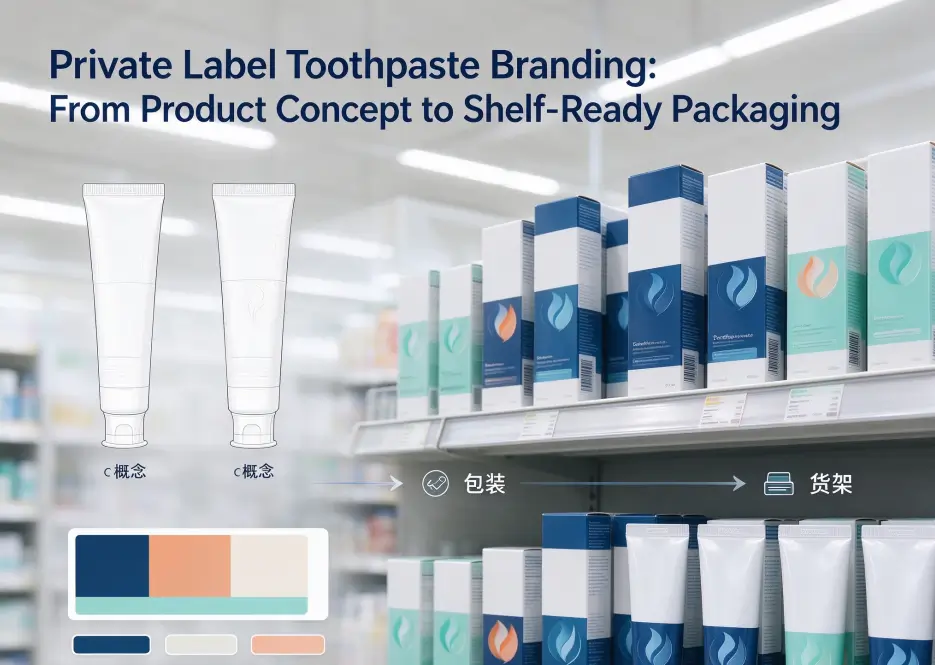
The key is moving from a simple idea to a finished tube that looks professional on a shelf or in online photos. Here is how the process works in practice.
Build Your Concept and Brand Feel First
Decide who the product is for before anything else. Sensitive teeth? Natural ingredient fans? Parents of young kids? Whitening seekers who want gentler options?
Pick one main focus. Broad claims rarely stick.
Decide the overall vibe next. Clean and minimal. Herbal and calm. Bright and playful. Clinical and trustworthy. This guides colors, fonts, and wording later.
Write a short product brief. Note the main benefit, target price, tube size, and first sales channel. That single page keeps everyone aligned.
Match the Formula to Your Story
The paste has to support the packaging claims. Common starting points include fluoride formulas, hydroxyapatite blends, herbal or charcoal options, and milder mixes for sensitive teeth or children.
Most new brands begin with a stock or lightly adjusted formula. It is faster and costs less.
Full custom work takes more time and money but gives exclusivity. Always request physical samples. Taste and feel them yourself. Texture and foam matter more than people expect.
Remember that some ingredients need specific tube materials to stay stable. Discuss compatibility early.
Design Packaging That Works Hard
The tube and carton do most of the selling. Laminated tubes remain the standard.
Choose size, cap style, and print method that fit your budget and look. Eco-friendly options such as recyclable or plant-based materials are widely available if that matches your brand.
Outer cartons give extra space for benefits and story. Keep text clear and readable. Bold logos help recognition, especially for private label products.
Match colors to the niche—soft greens for natural, clean whites and blues for clinical, brighter tones for kids.
Leave room for required details: ingredients, directions, warnings, barcodes, and batch codes. Claims must be supportable. Create a simple design brief with your colors, fonts, and examples so the designer or manufacturer knows exactly what you want. Learn more about tube and carton customization.
Handle Compliance and Quality
Rules differ by market. Fluoride products in the United States often need specific over-the-counter labeling. Other regions have their own standards.
Your manufacturer should supply supporting documents, but review labels carefully.
Certifications such as GMP or ISO add trust. Stability and quality testing happen before full production. These steps protect both you and the customer.
Choose a Manufacturer and Move Forward
Look for partners experienced in private label oral care. Flexible minimums, clear communication, and packaging support matter.
Typical MOQs start around 5,000–10,000 tubes. Lead times after final approvals often run 45–60 days. Packaging materials can stretch the schedule, so plan them early.
Startup costs for a first batch usually fall between $3,000 and $50,000. Getting samples from a few suppliers and comparing quality beats chasing the lowest quote alone.
Key Takeaways
- Start with one clear niche and brand feel.
- Align formula, claims, and packaging from the beginning.
- Treat packaging as a brand tool, not just a container.
- Budget $10k–$50k and expect 45–60 days after approvals.
- Test samples yourself and keep claims honest.
- Work with a manufacturer who supports both formula and design.
Comparison of Common Launch Paths
| Path | Typical MOQ | Startup Cost Range | Lead Time After Approval | Best For |
|---|---|---|---|---|
| Stock formula | 3,000–8,000 | $10k–$25k | 6–10 weeks | Fast testing, lower risk |
| Semi-custom | 5,000–10,000 | $15k–$35k | 8–12 weeks | Light differentiation |
| Full custom | Higher | $30k–$60k+ | 3–6 months | Unique formula ownership |
| US-based production | 8,000–15,000+ | $25k–$50k+ | 6–10 weeks | “Made in USA” claims |
Manufacturer List
Several suppliers regularly support private label toothpaste projects. Examples include Toothpaste Factory.
Look for GMP or ISO certification, sample quality, packaging assistance, and transparent pricing. Contact three to five, request samples, and compare total landed costs including freight. Experience with your target market (US, EU, or others) is a strong plus.
Once production finishes, check the final packs carefully. Take clear product photos. Match website or listing language to the carton.
Many brands launch online first to test demand, then expand into retail. Gather early feedback and adjust if needed.
FAQs
How much does it cost to start a private label toothpaste brand?
Most first runs land between $3,000 and $50,000. This covers samples, packaging, production, and basic setup. Full custom work sits at the higher end.
What is a typical minimum order quantity?
Common starting MOQs range from 5,000 to 10,000 tubes per SKU. Some stock options go lower.
How long until the product is shelf-ready?
After you approve samples and final artwork, expect 45–60 days for finished goods in many cases. Packaging lead times can add time.
Can I fully customize the packaging?
Yes. Tube material, size, print, cap style, and carton design are all adjustable. Confirm formula compatibility first.
Do I need special certifications?
GMP and ISO are widely expected. Market-specific rules (such as FDA labeling for certain claims) also apply. Your manufacturer can guide the paperwork.
Should I start with stock or custom formula?
Stock or semi-custom works well for first launches. It is faster and less expensive. Move to full custom once you have sales data.
The path from idea to a finished tube on the shelf is practical when you keep decisions focused. Clear niche, solid samples, thoughtful packaging, and a reliable partner make the biggest difference. Plenty of small brands have done exactly this by staying practical and treating the tube as part of the brand experience.