MOQ: 10,000 PCS per SKU | Tiered Pricing from 20,000 PCS | In Stock & Flexible Wholesale

Quick Answer: Start with 2–3 focused SKUs like daily care, sensitivity, and whitening or natural. Use private-label manufacturing for stronger margins. Keep claims simple and compliant. Price so retailers make money too. Pitch with clear sell sheets. Most first runs cost $10,000–$50,000 and can reach shelves in 3–6 months when you stay practical.
Building a toothpaste line that actually sells in stores feels less scary once you break it down. Retail buyers want products that move and give shoppers easy choices. A small, smart portfolio does that better than one lonely tube. I’ve watched brands succeed by keeping things focused and retailer-friendly. Here’s how you can do the same.
Understand What Retail Really Wants
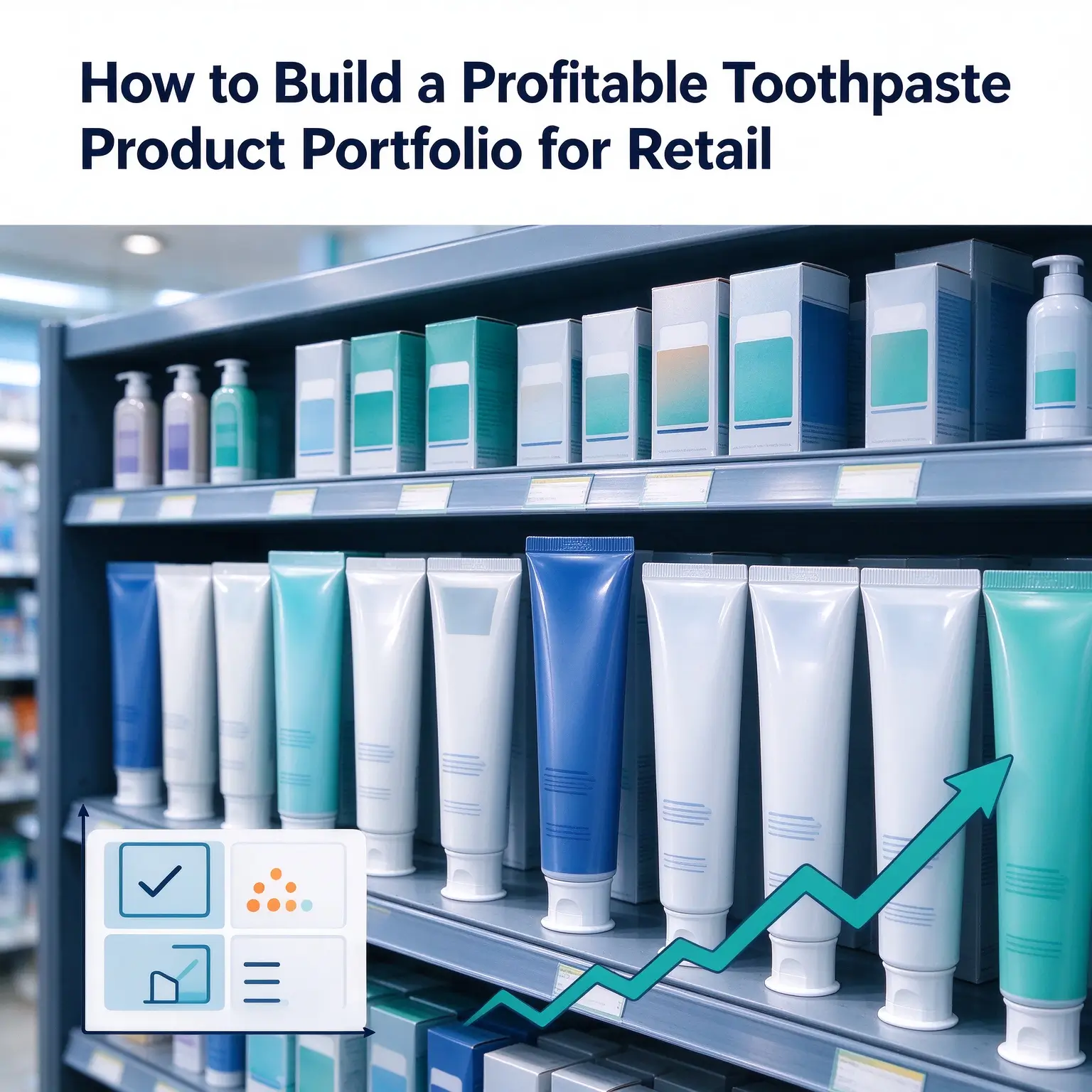
Shoppers grab toothpaste regularly. Retailers care about turns, margins, and clean shelves. Sensitivity and enamel formulas keep selling well. Whitening still draws attention. Natural and cleaner options appeal to a growing group. Pick one main need first. Then add one or two supporting products. This creates a good-better-best setup that lifts average sale value without clutter.
Pick Your Niche and Build the Line
Look at real reviews. People often mention weak results, strong aftertaste, or irritation. Those notes point to gaps. A solid starter set might include everyday fluoride paste, a sensitivity version, and a gentler natural or whitening option. Travel sizes fit nicely later. Keep the total small at launch. Two or three SKUs let you test without heavy inventory risk. Expand only after you see what sells.
Formulation and Manufacturing Choices
You rarely need a brand-new formula. Start with a proven base and adjust flavor or one key ingredient. Fluoride remains the everyday standard. Nano-hydroxyapatite or mild desensitizers work for premium feel. Work with an experienced private-label partner. Ask for samples right away. Use them yourself for a week. Check texture, taste, and how the tube feels. Stability and mild formulas matter more than flashy extras.
Key Takeaways
- Launch with 2–3 clear SKUs instead of a big range.
- Private label usually delivers higher margins than reselling big brands.
- Retailers respond to simple line sheets, fair wholesale pricing, and products that turn.
- Compliance and realistic claims protect you long-term.
- Track sell-through early and drop slow items fast.
Comparison Table: Manufacturing Paths
| Option | Typical MOQ | Startup Cost | Lead Time | Best For |
|---|---|---|---|---|
| Stock formula | 3,000–8,000 | $10K–$25K | 6–10 weeks | Fast testing, lower risk |
| Semi-custom | 5,000–10,000 | $15K–$35K | 8–12 weeks | Light differentiation |
| Full custom | Higher | $30K–$60K+ | 3–6 months | Unique formula |
| U.S.-based | 8,000–15,000+ | $25K–$50K+ | 6–10 weeks | “Made in USA” claims |
Manufacturer List
Several partners support private-label toothpaste with flexible options. Guangzhou-based factories often offer low MOQs and quick samples for new brands. Some U.S. makers focus on OTC fluoride products and clearer regulatory paths. Look for ISO or GMP certification, clear communication, and sample quality. Always verify current registrations yourself. Request references and recent stability data before signing.
Pricing, Packaging, and Retail Entry
Calculate your full landed cost first. Include paste, tube, testing, freight, and a buffer. Wholesale prices should leave the retailer a solid margin. Suggested retail for mid-tier tubes often sits between $6 and $12. Packaging needs to look clean under store lights. Clear benefit text and consistent design across the line help. Eco-friendly tubes attract certain shoppers. Prepare a one-page line sheet with photos, prices, and case packs. Bring samples when you pitch. Start with independent pharmacies or regional chains. Offer a low-risk first order. Support the product so it sells through. Eye-level placement and need-based grouping make a difference.
Compliance and Trust
Decide early if your products stay cosmetic or move into OTC territory. Keep claims modest and supportable. Get full documentation from your manufacturer. Different markets have different rules, so plan for the ones you actually target. Transparent labeling builds trust with both buyers and shoppers.
Scaling Without Losing Focus
Once the core line moves, consider a matching mouthwash or soft brush. Bundles can raise the basket size. Watch the numbers every month. Keep what turns and improves margin. Drop the rest. Trends shift toward cleaner formulas and enamel care. Stay ready to adjust one SKU at a time.
A practical portfolio built this way gives retailers products that sell and shoppers choices they understand. You keep control of the brand and the margins. Start narrow, stay honest on claims, and treat every retailer conversation as a partnership. That approach turns simple tubes into steady retail business.
FAQs
How much does it cost to start? Most first runs fall between $10,000 and $50,000 depending on customization and volume.
How many products should I launch with? Two or three focused SKUs work best. Expand after real sales data.
What is the best first niche? Sensitivity or everyday enamel care often builds loyal repeat buyers.
Do I need special approvals? It depends on ingredients and claims. Verify with your manufacturer and current rules for your target markets.
How long until products reach shelves? Many brands move from samples to first retail orders in 3–6 months when they keep the process simple.