
MOQ: 10,000 PCS per SKU | Tiered Pricing from 20,000 PCS | In Stock & Flexible Wholesale

Quick Answer
For most new toothpaste brands, a stock formula is the better starting choice. It helps you launch faster, reduce upfront costs, and minimize risk while testing real market demand.
Custom toothpaste formulas make more sense once you have sales data, a clear product differentiation strategy, and the budget to invest in exclusive formulations. Many successful oral care brands start with stock formulas or minor modifications and move to custom development as they grow.
Launching a new toothpaste brand requires an early decision: should you use a ready-made stock formula or invest in a fully custom formulation?
The right choice depends on your business stage, available budget, target customers, and how differentiated your toothpaste needs to be.
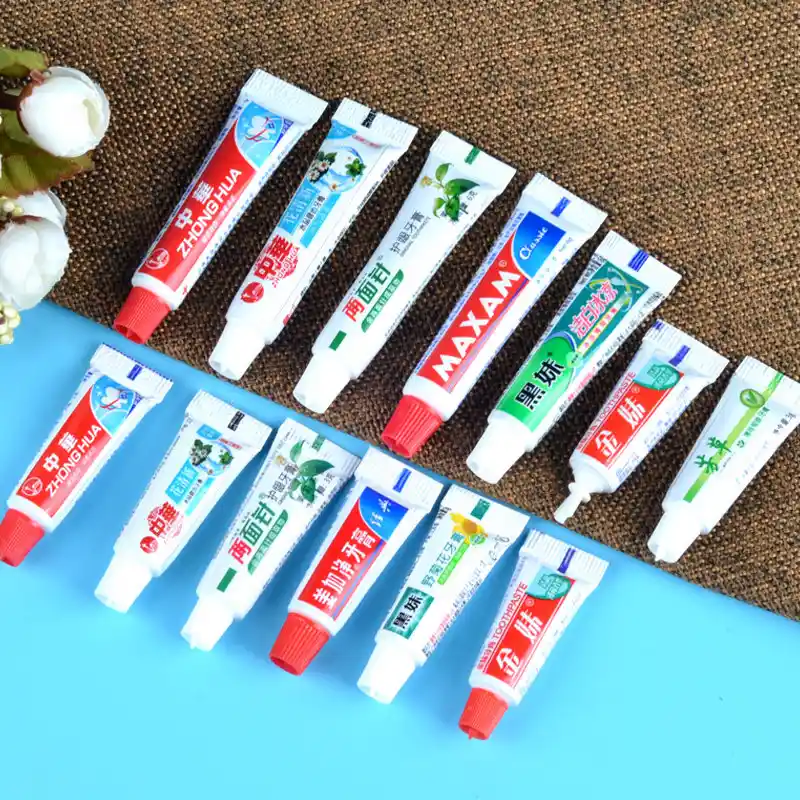
A stock toothpaste formula is a pre-developed formulation that a manufacturer already produces.
You select a suitable formula, choose flavor and packaging options where available, apply your branding, and move toward production. Other brands may be able to use the same or a similar base formula.
A custom toothpaste formula is developed specifically for your brand.
Depending on the project and contract, you may have greater control over ingredients, flavor, texture, foaming properties, fluoride content, and other product characteristics. Formula ownership and exclusivity must be clearly defined in the manufacturing agreement.
Semi-custom toothpaste sits between these two options.
You start with an existing formulation and make selected adjustments, such as flavor, color, texture, packaging format, or certain ingredients, subject to technical feasibility, safety requirements, and regulatory compliance.
Side-by-Side Comparison
| Factor | Stock Toothpaste Formula | Custom Toothpaste Formula |
|---|---|---|
| Time to launch | Usually faster; depends on packaging, testing, and compliance requirements | Usually longer due to formulation development and validation |
| Upfront cost | Generally lower | Higher due to R&D and additional testing |
| Minimum order quantity | May be lower, depending on the manufacturer | May be higher due to development and production requirements |
| Product uniqueness | Limited unless customization is available | Greater potential for differentiation |
| Development risk | Generally lower when using an established formula | Higher due to development, stability, and performance uncertainties |
| Long-term competitive advantage | Often relies on branding, distribution, and customer experience | May be stronger if the formulation offers a meaningful, defensible advantage |
| Who owns the formula? | Typically the manufacturer, subject to the agreement | Depends on the development and intellectual property contract |
Why Stock Toothpaste Formulas Work Well for New Brands
Stock toothpaste formulas can significantly reduce the time and investment required to develop a new product.
Instead of starting from scratch, you work with a formulation the manufacturer already offers. Depending on the formula and its existing test data, this can simplify development.
It also allows you to focus more resources on branding, packaging, marketing, and distribution.
A ready-made formula may provide more accessible minimum order quantities and a clearer cost structure.
This is particularly useful for first-time oral care entrepreneurs who want to validate demand before committing to a large production run.
Many manufacturers offer established toothpaste options for different positioning strategies, including:
- Fluoride toothpaste for everyday oral care
- Herbal toothpaste for botanical-inspired positioning
- Whitening-focused toothpaste
- Sensitivity-oriented toothpaste
- Children’s toothpaste
Availability, permitted claims, ingredient requirements, and testing obligations vary by market and product type.
The main trade-off is differentiation. Competing brands may use similar base formulas, making it harder to stand out through formulation alone.
Your flavor selection, packaging design, brand positioning, customer experience, and distribution strategy therefore become especially important.
Any performance or oral health claims must also be supported by appropriate evidence and comply with applicable regulations.
When Custom Toothpaste Formulas Make Sense
Custom toothpaste development becomes more attractive when your brand needs a specific product experience that existing formulas cannot adequately deliver.
This might involve a distinctive flavor profile, a particular texture or foaming experience, or a carefully designed ingredient combination.
It may also involve a formulation developed for a clearly defined target market.
A custom formula can support a stronger product identity.
For example, a brand targeting premium oral care customers may want tighter control over ingredient selection, sensory characteristics, and product positioning.
A company planning to expand internationally may also need formulations adapted to different market requirements.
However, toothpaste development involves more than selecting ingredients.
Compatibility, stability, pH, abrasivity where relevant, packaging compatibility, microbiological quality, and product performance may all require evaluation.
Products containing fluoride or ingredients associated with specific oral health benefits may have additional requirements depending on the target market.
Custom development generally requires more time, money, and coordination with the manufacturer.
If the initial formula does not meet your expectations, further revisions and testing may be necessary.
Before investing, confirm the development scope, testing responsibilities, formula ownership, exclusivity terms, and production commitments in writing.
These details help clarify your rights, responsibilities, and potential costs before the project begins.
Practical Decision Guide
Choose a stock or lightly customized toothpaste formula if this is your first oral care product, your budget is limited, or you want to launch quickly.
This approach is also suitable if you still need to validate customer demand. It allows you to test the market without immediately investing heavily in formulation research and development.
Consider a custom formula earlier if you have strong customer insights and a clear product concept that existing formulas cannot meet.
You should also have sufficient development capital and a realistic plan for testing and regulatory compliance.
Custom development is most valuable when the resulting product difference matters to customers and can be supported by evidence.
Before choosing a manufacturer, compare more than the quoted unit price.
Ask about minimum order quantities, sample availability, lead times, ingredient specifications, quality control, stability data, packaging compatibility, and documentation.
You should also confirm the manufacturer’s experience with your intended sales markets.
For many new toothpaste brands, a hybrid strategy is the most practical option.
Launch with a proven stock formula or a limited set of modifications, gather customer feedback, and identify which features influence repeat purchases.
This helps you understand what customers value before investing in more extensive product development.
Once the brand has traction, reinvest in a custom formulation that addresses a demonstrated market need.
This strategy reduces early-stage risk while creating opportunities for stronger differentiation later.
Key Questions to Ask Yourself
- How quickly do I need to launch my toothpaste product?
- Have I validated demand for my target customers, or am I still testing the concept?
- Will my competitive advantage come from the formula, the flavor experience, the packaging, or the overall brand?
- Does the manufacturer offer a suitable stock formula that meets my product requirements?
- Can I afford formulation development, revisions, testing, and regulatory work if I choose a custom product?
- Who will own the formula, and what exclusivity rights will my brand receive?
- What testing, documentation, and compliance requirements apply in my target markets?
Final Recommendation
For most new toothpaste brands, starting with a suitable stock formula is the more practical choice.
It can reduce initial development costs, simplify the launch process, and help you start collecting customer feedback sooner.
You can then use real sales data to decide whether a custom formula would provide enough additional value to justify the investment.
Custom toothpaste formulas are worth considering when your brand has a clear differentiation strategy, sufficient funding, and a product concept that existing options cannot adequately deliver.
The key is to ensure that the additional investment translates into a meaningful customer benefit rather than simply making the formulation more complicated.
Neither option is automatically better. The right choice depends on your brand’s current stage, resources, target market, and product goals.
Start with a suitable formulation, learn from customers, and improve as you grow.
A well-executed launch and a clear understanding of customer needs are often more valuable than delaying your business in pursuit of a perfect formula.